By Cassidyy Atkins
Yes, you can still enjoy restaurants. Eating out is probably one of the trickiest parts of going seed oil-free.
When you start paying closer attention to ingredients, you quickly realize that restaurant food is very different from cooking at home. Oils can show up on the grill, in a marinade, inside a sauce, tossed with vegetables, brushed onto bread, mixed into dressings, or sitting in the fryer.
But I also don't believe that eating real food means you can never enjoy a restaurant again.
For me, restaurants are something I genuinely love.
Daniel and I have loved trying new restaurants since we were dating. My dad likes to call us foodies—or food snobs—but experiencing a beautiful meal from a great chef has always been fun for us. We've tried restaurants around the country, ordered things we've never had before, and made some really wonderful memories around food.
When we started taking our health more seriously, especially after COVID, that changed for a season. There was actually a stretch of several years when we hardly ate out at all outside of traveling, holidays, or the occasional family dinner.
Coming back into restaurants after that was an entirely different experience. Once you understand ingredients differently, you start noticing things you never thought about before.
But I don't want food to become something you're afraid of.
The goal is simply to become a more informed eater.
If you're traveling and want the most control over your food, packing food or stopping at a grocery store once you arrive will almost always be your easiest option.
But you're going to find yourself in restaurants.
You're going to travel.
You're going to celebrate birthdays.
You're going to eat at someone's house.
And sometimes you're going to want a beautiful dinner out.
Here's how I navigate it.
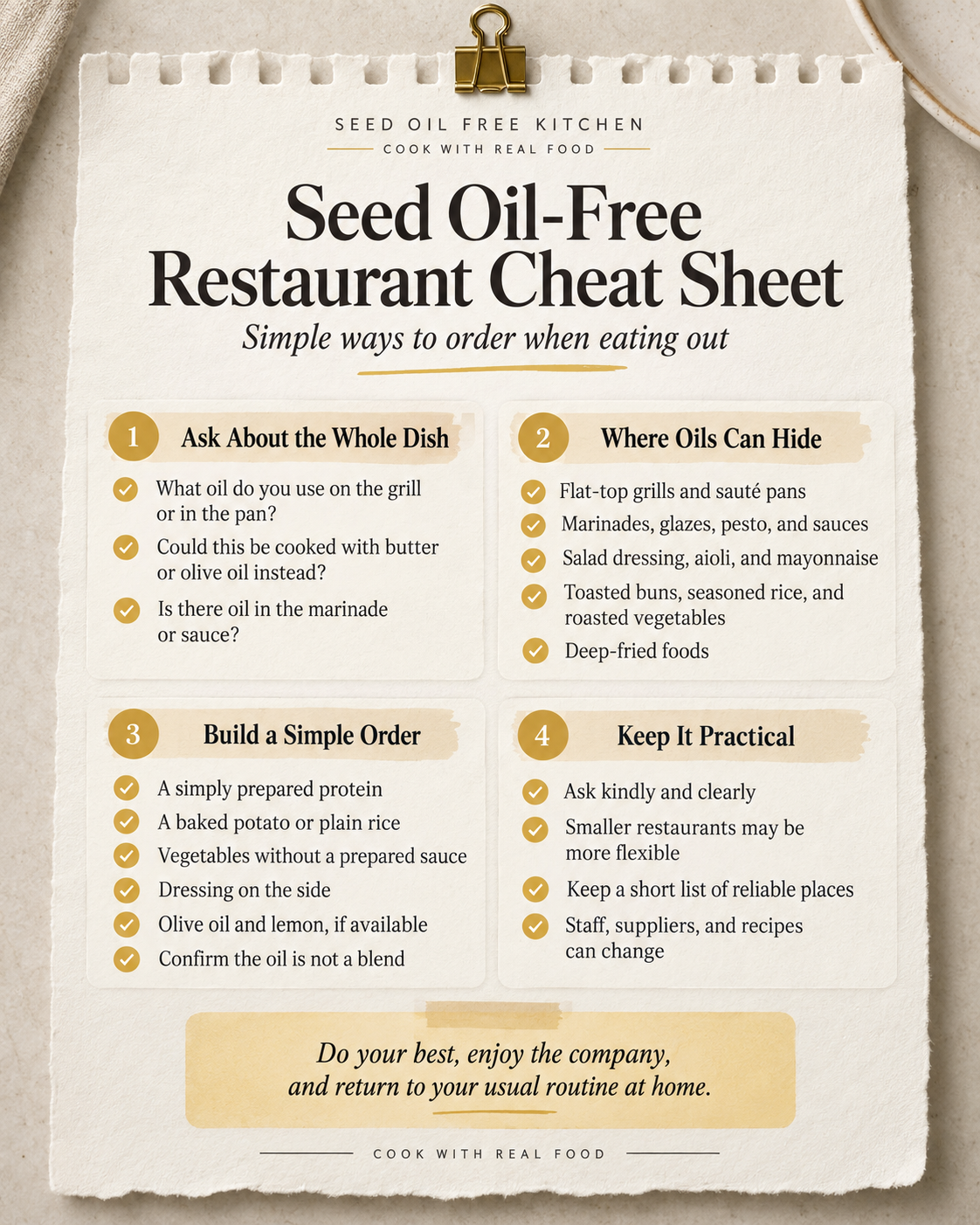
First: Don't Be Afraid to Ask
This is the biggest thing.
Advocate for yourself.
You don't have to give the server a nutrition lecture or explain everything you know about linoleic acid.
Just ask.
A simple question can tell you a lot:
“What oil do you use to cook the steak?”
Or:
“Is there any oil used on the grill or in the pan?”
If they tell you they're using soybean, canola, vegetable, sunflower, or another seed oil, follow with:
“Would it be possible to cook mine in butter, olive oil, or with no added oil?”
You may be surprised by how easy it is.
If you're ordering chicken or fish, I might ask:
“Is the chicken already marinated, or is it plain?”
Because even if the restaurant cooks it in butter for you, the marinade may already contain an oil you're trying to avoid.
For salads:
“Is the dressing made here? What oil is used in it?”
And if you're not sure:
“Could I have olive oil and lemon on the side instead?”
You don't need to say you have an allergy or intolerance if you don't. I simply treat it as a food preference.
Restaurants may or may not be able to accommodate it—and that's okay.
Ask About the Whole Dish
One of the biggest mistakes you can make is only asking about the meat.
You order a beautiful steak cooked in butter…
…but the vegetables are tossed in canola oil.
Or the potatoes are coated in vegetable oil before roasting.
Or the sauce has soybean oil.
Think about the whole plate.
I like this question:
“What oil do you use on the grill or in the pan? Could this be cooked in butter or olive oil instead? And is there any oil in the marinade, vegetables, or sauce?”
That's usually enough.
Where Seed Oils Can Hide
The obvious foods aren't always the biggest problem.
Watch for oils in:
- Flat-top grills
- Sauté pans
- Marinades
- Glazes
- Pesto
- Sauces
- Salad dressings
- Aioli
- Mayonnaise
- Toasted buns
- Bread
- Seasoned rice
- Roasted vegetables
- Crispy toppings
- House-made dips
- Fryers
And, of course, anything deep-fried is worth asking about.
French fries, tortilla chips, fried chicken, calamari, tempura, fried shrimp, crispy Brussels sprouts—you get the idea.
If it's fried, I assume I need to ask.
My Easiest Restaurant Order
When I want to make things simple, I build the meal around foods that don't require a lot of preparation.
Protein
- Steak
- Burger patty
- Grilled chicken
- Fish
- Pork chop
- Lamb
Ask for it plain or cooked in:
Butter, ghee, olive oil, avocado oil, tallow—or dry if necessary.
Then ask whether it has already been marinated.
A Simple Carb
- Baked potato
- Plain rice
- Sweet potato
- Fresh fruit
A baked potato with butter and salt is one of the easiest restaurant sides.
Vegetables
Ask whether they’re cooked in oil.
You can request:
“Could you steam those or cook them in butter instead?”
Salad
Order dressing on the side and ask what oil is used.
When I'm unsure, I'll often ask for:
Olive oil + lemon + salt.
And I specifically ask whether the olive oil is actually olive oil rather than a restaurant oil blend.
What About Chain Restaurants?
This is where things can get harder.
Large restaurant chains often rely on standardized recipes, pre-made sauces, dressings, marinades, bread products, and pre-portioned ingredients. That can make substitutions more limited.
On the other hand, chains sometimes have detailed ingredient information online, which can make researching your meal beforehand easier.
Smaller or locally owned restaurants—especially restaurants where more of the food is actually being prepared in-house—may have more flexibility.
I've found that a chef can often do something very simple:
“Just cook mine in butter.”
That doesn't mean every local restaurant is automatically seed oil-free or every chain is impossible.
Ask.
That's the theme of this entire guide.
A Restaurant Doesn't Have to Be 100% Seed Oil-Free
You don't necessarily have to find a completely seed-oil-free restaurant.
Sometimes you simply need to find one meal they can prepare in a way that works for you.
Maybe the fryer uses canola oil.
Fine.
You're not ordering from the fryer.
Maybe their house dressing contains soybean oil.
You're getting olive oil and lemon.
Maybe the roasted vegetables are prepped in vegetable oil.
You're ordering a baked potato instead.
You're looking for the foods you can eat instead of staring at everything you can't.
Use Seed Oil Scout
This is one of my favorite resources when traveling or looking for somewhere new.
It's a community-driven restaurant map that helps you find restaurants and see information about the fats, oils, ingredients, and sourcing they're using.
More restaurants are becoming aware of this conversation all the time, which means our options are growing.
I still recommend confirming things with the restaurant when you arrive because ingredients, recipes, suppliers, and kitchen practices can change.
Traveling? Grocery Stores Are Your Friend.
If being seed oil-free is important to you, don't make every meal on a trip dependent on restaurants.
One of the first things we can do when traveling is stop at a grocery store.
Depending on where we're staying, I'll grab things like:
- Eggs
- Fruit
- Cheese
- Yogurt
- Sourdough
- Butter
- Lunch meat with simple ingredients
- Rotisserie or prepared proteins after checking ingredients
- Raw vegetables
- Milk
- Mineral water
- Snacks with ingredients I recognize
Even if you only cover breakfast and lunch yourself, you suddenly have much more freedom to enjoy a great dinner somewhere without needing three restaurant meals every day.
Ordering Groceries In?
Grocery delivery apps can make this even easier.
Grocery delivery apps can help you search for products and compare options before ordering.
Use them to help narrow your search—but still read the ingredient label yourself.
Search for the product.
Zoom in on the ingredients.
Look at the label.
Don't assume something is seed oil-free because an algorithm says it matches your preferences.
Technology can help you shop.
The ingredient list gets the final vote.
Keep Your Own Restaurant List
Once you find restaurants that are helpful, save them.
I keep mental notes about places where:
- The staff understood what I was asking.
- The chef was willing to cook in butter.
- They use olive or avocado oil.
- They fry in beef tallow.
- They make dressings from scratch.
- They use high-quality ingredients.
- I had several easy menu options.
Build your own little list of restaurants you trust.
Just remember to ask again occasionally. Restaurants change suppliers, recipes, chefs, and ingredients.
And If You Eat the Seed Oil…
Don't panic.
This is really important.
If I go somewhere and realize afterward that something was cooked in an oil I wouldn't have chosen at home, I don't spend the rest of the evening stressed about it.
One meal isn't your lifestyle.
Come home and go back to your normal food.
And when someone invites you into their home and lovingly cooks you dinner, use wisdom and decide what matters in that moment.
Food is important.
So are relationships.
Going seed oil-free shouldn't make you afraid to travel, eat with your family, celebrate holidays, or enjoy your life.
This isn't about perfection.
It's about making your everyday choices increasingly intentional.
SAVE THIS: My Seed Oil-Free Restaurant Checklist
Before You Order 1. Ask about the cooking oil. “What oil is this cooked in?”
2. Ask about the marinade. “Is the meat already marinated?”
3. Ask about the sides. “Are the vegetables or potatoes cooked in oil?”
4. Ask for a swap. “Could mine be cooked in butter, olive oil, avocado oil, tallow, or without oil?”
5. Check the sauce. “Is there oil in the sauce or dressing?”
Easy order
Simply cooked protein + baked potato, plain rice, or fruit + plain/steamed vegetables + butter, lemon, salt, herbs, or verified olive oil.
And then?
Enjoy your dinner.
Enjoy the people you're with.
Tomorrow, cook with real food again.